
Note: The information in this article is for informational and educational purposes only. It does not constitute medical advice. Those with high blood pressure or other cardiovascular conditions should always refer to their primary care physician.
Among the most common questions that high blood pressure sufferers ask, one recurs with regularity: which water is best to drink? It is a legitimate question, often arising after a doctor’s visit or a conversation with a family member, and deserves a factual and honest answer.
High blood pressure is one of the most prevalent conditions in the adult population: according toWorld Health Organization estimates, about one in three adults worldwide suffers from it. Among the daily habits that can affect blood pressure, the choice of water one drinks each day is one of the least considered, yet constantly present: every sip, every day, for a lifetime.
In this article we explore the link between sodium, hydration, and cardiovascular health, with a focus on values to look for on the label and habits that really make a difference.
Sodium and blood pressure: a link not to be underestimated
Sodium is an essential mineral: it regulates body fluid balance, supports nerve impulse transmission, and contributes to muscle contraction. The problem is not sodium itself, but its excess.
When the body accumulates more sodium than it can dispose of, the kidneys retain more water to dilute it. This increases circulating blood volume and, consequently, pressure on arterial walls. This is the mechanism behind the link between excess sodium and hypertension: more sodium, more fluid retained, more pressure.
The World Health Organization recommends a daily sodium intake of less than 2 grams, equivalent to about 5 grams of table salt. Most adults in Western countries exceed this threshold, often without realizing it: sodium is hidden in packaged foods, aged cheeses, sausages, and many sauces. In this context, water choice also contributes to total sodium intake, quietly but steadily.
This is not as crucial a contribution as food, but it is a variable that can be controlled very easily: you just need to know what to read on the label.
What low sodium water means: values to know
Italian and European regulations establish precise criteria for classifying mineral waters according to sodium content. Knowing these categories allows for informed orientation among the different options available.
| Classification | Sodium content (mg/L) |
|---|---|
| Hyposodic water (low in sodium) | Less than 20 mg/L |
| Low sodium water | Less than 200 mg/L |
| Sodium-rich water | More than 200 mg/L |
Source: Directive 2009/54/EC and Legislative Decree 176/2011
A water is defined as low sodium when its sodium content is less than 20 mg/L: this is the reference threshold for those who need to limit their dietary intake of this mineral, including people with hypertension.
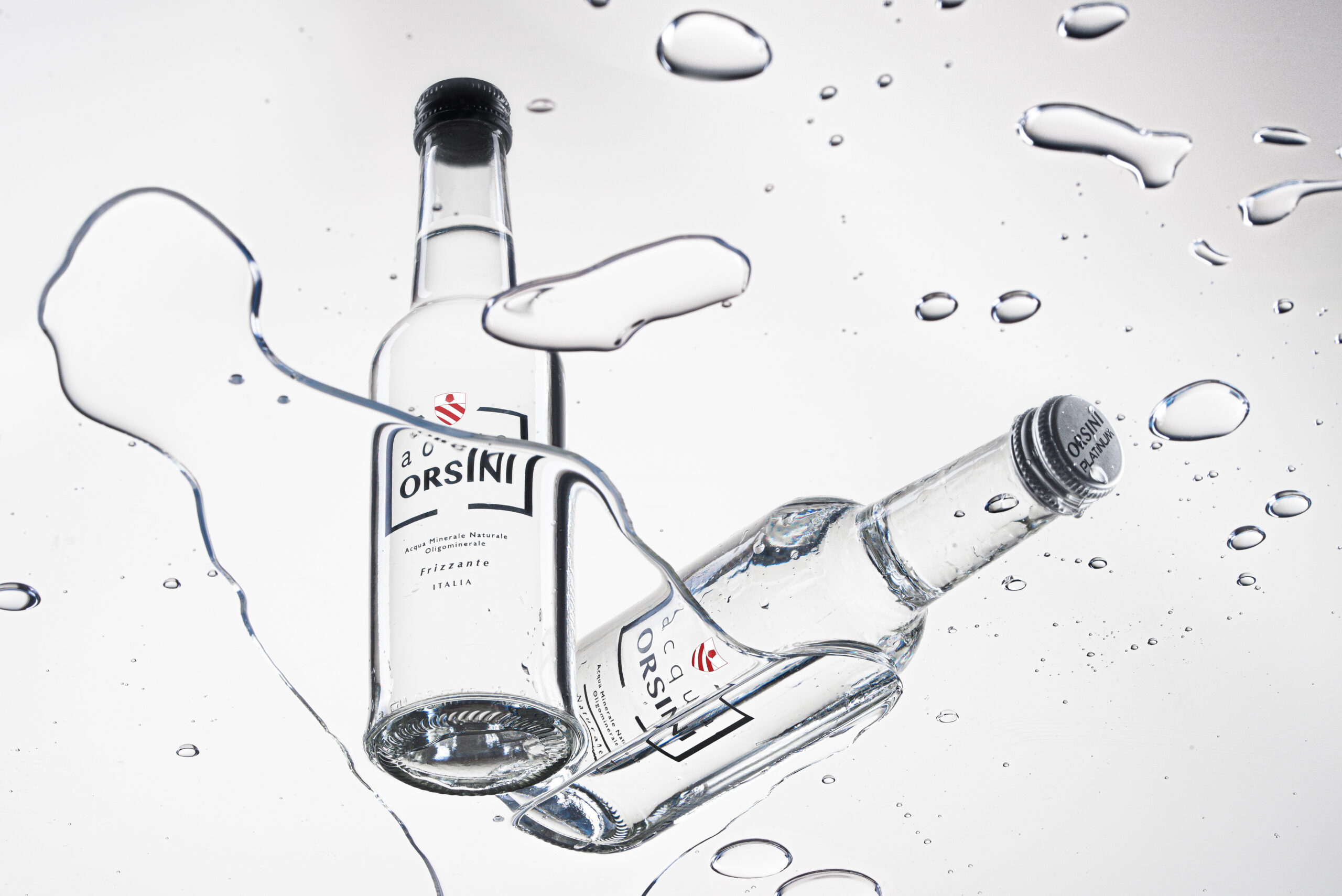
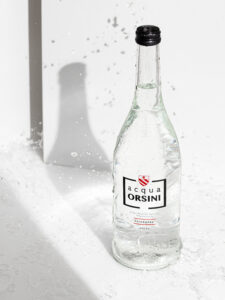
Acqua Orsini contains 11 mg/L of sodium, certified by chemical analysis conducted by the University of Naples Federico II on December 28, 2023. A value that not only falls within the hyposodic category, but is almost half the maximum threshold allowed for this classification: a concrete guarantee, verifiable on the label of each bottle.
Who should choose a low-sodium water
Choosing a low-sodium water is particularly suitable for certain categories of people, but it is also a good habit as a preventive measure for those who do not yet have a specific diagnosis.
For those suffering from hypertension, reducing overall sodium intake is one of the pillars of nonpharmacological treatment. The doctor typically recommends limiting salt in cooking, but also paying attention to all sources of sodium in the daily diet, including water. Choosing a low-sodium water is a simple gesture that helps keep overall daily intake low without sacrificing proper hydration.
For those who have kidney problems, the issue is even more relevant. The kidneys filter and eliminate excess sodium: when their function is impaired, the ability to handle sodium is significantly reduced. In such cases, the choice of water should always be made in consultation with the nephrologist.
Those who suffer from water retention can also benefit from sodium reduction through water: sodium, by retaining fluid in the tissues, can exacerbate lower limb swelling and heaviness. Similarly, the Pregnant women, a category prone to changes in blood pressure and body fluid volume, may find hyposodium water a choice consistent with the dietary guidelines generally recommended during this period.
Finally, those who simply follow a reduced-sodium diet for preventive or general wellness reasons are well advised to also consider water as part of the equation: it is a controllable variable, easy to manage, and without any compromise on taste or hydration quality.
Not just sodium: why water low in sodium and high in calcium really makes a difference
Reducing sodium is the starting point, but it is not the only variable that matters when choosing a water for those keeping an eye on blood pressure. The overall mineral profile, particularly the presence of calcium and magnesium, is equally important.
Calcium plays an active role in the regulation of vascular tone, that is, the ability of arteries to contract and relax appropriately. Several observational studies have shown an association between adequate calcium intake and more favorable blood pressure values. Water that is low in sodium and at the same time rich in calcium thus offers a double advantage: it eliminates a risk factor and introduces an element with potential protective effect.
Magnesium, for its part, contributes to relaxation of the smooth muscles of blood vessels, promoting less resistance to blood flow. It is a mineral often lacking in the modern diet, and its presence in water represents a valuable and constant daily intake.
Finally, bicarbonates have a buffering function in the body: they help maintain a stable pH of the blood and body fluids, support digestion, and help counteract acidity. They do not directly affect blood pressure, but contribute to the overall balance of the body.
Acqua Orsini brings all these characteristics together in a single, certified and verifiable profile:
| Parameter | Certified value (mg/L) |
|---|---|
| Sodium | 11 mg/L |
| Calcium | 60 mg/L |
| Magnesium | 23 mg/L |
| Bicarbonates | 248 mg/L |
| Chlorides | 17 mg/L |
| Sulfates | 9 mg/L |
| Fixed residue at 180°C | 328 mg/L |
| Classification | Oligomineral |
Source: Chemical Analysis University of Naples Federico II, Department of Chemical Sciences, December 28, 2023.
Low sodium, good calcium and magnesium, abundant bicarbonates: this is not a random combination, but the result of a balanced natural spring kept in the Alta Murgia National Park in Poggiorsini, Apulia.
How to read the label and choose the right water
Choosing the best water for high blood pressure sufferers does not require special skills, but a little attention to the label. By law, every bottle of mineral water must list the chemical composition of the product. Here are the four parameters to look out for.
Sodium content is the starting point: below 20 mg/L to be in the hyposodium category. Orsini water contains 11 mg/L of it.
Fixed residue indicates the total amount of dissolved minerals in water. A value below 500 mg/L defines an oligomineral, light and easily assimilated water. Acqua Orsini has a fixed residue of 328 mg/L: light enough to be suitable for copious daily consumption, mineral enough to provide real nutrients.
The calcium and magnesium content, as we have seen, is also worth looking for in a low-sodium water. Not all low-sodium waters are rich in these two minerals-it is a detail that makes a difference in terms of overall cardiovascular well-being.
Finally, bicarbonates are an indicator of the buffering quality of water. An adequate content, such as Orsini Water’s 248 mg/L, signals a water that not only hydrates but also supports the body’s acid-base balance.
The rule of thumb is simple: do not stop at the sodium value alone, but read the complete mineral profile. Water with low sodium but low in everything else is not necessarily the best choice.
Good hydration habits for those keeping an eye on blood pressure
Choosing the right water is important, but how you drink it also matters. Hydration habits affect blood pressure more directly than we think.
Even mild dehydration can cause a temporary rise in blood pressure: the body, to compensate for the reduction in blood volume, activates mechanisms that raise blood pressure. Waiting until you are thirsty before drinking means you are already in a state of partial dehydration. Thirst is a late signal, not a starting point.
The goal is to distribute water needs consistently throughout the day: one glass upon waking, one mid-morning, one or two at lunch, one in the afternoon, and one or two at dinner. Small, frequent amounts that avoid both peaks and deficiencies.
It is also worth paying attention to other drinks consumed throughout the day. Some natural effervescent waters, many sports drinks and several soft drinks contain significant amounts of sodium. High blood pressure sufferers should read the labels not only of water, but of all liquids they consume regularly.
Finally, an often overlooked point: hydration alone does not compensate for an unhealthy lifestyle. For those managing blood pressure, medical indications typically include a salt-reduced diet, regular physical activity, reduced alcohol consumption, stress management, and, when necessary, drug therapy. Choosing quality low-sodium water fits consistently into this picture: it is not a therapy, but a daily ally that works silently, sip by sip.
Orsini water and cardiovascular wellness: a conscious daily choice
We live in a time when awareness toward health has grown tremendously. People read labels, inform themselves, ask questions. And they are right to do so: everyday choices, even seemingly mundane ones like which water to drink, add up over time and help build or erode well-being.
Choosing low-sodium water is not a gesture of deprivation. It is a gesture of care. It is recognizing that every sip counts, that the body deserves attention even in the details, that the quality of what you introduce into the body is never a secondary consideration.
Acqua Orsini was born with this awareness. From the Alta Murgia National Park, a pristine territory that holds an authentic spring, each bottle carries a certified, balanced and transparent mineral profile. Eleven milligrams of sodium per liter is not a slogan: it is a verifiable figure, stated on the label, analyzed by an independent university laboratory.
Noble by Nature, Sustainable by Choice: a commitment that is measured every day, in every sip.